Homeowner resource
Plant City Driveway Permit: Who Issues It and What the City Checks
Tax District first, then the apron spec, the form inspection and any HOA or historic sign-off.
Quick answer
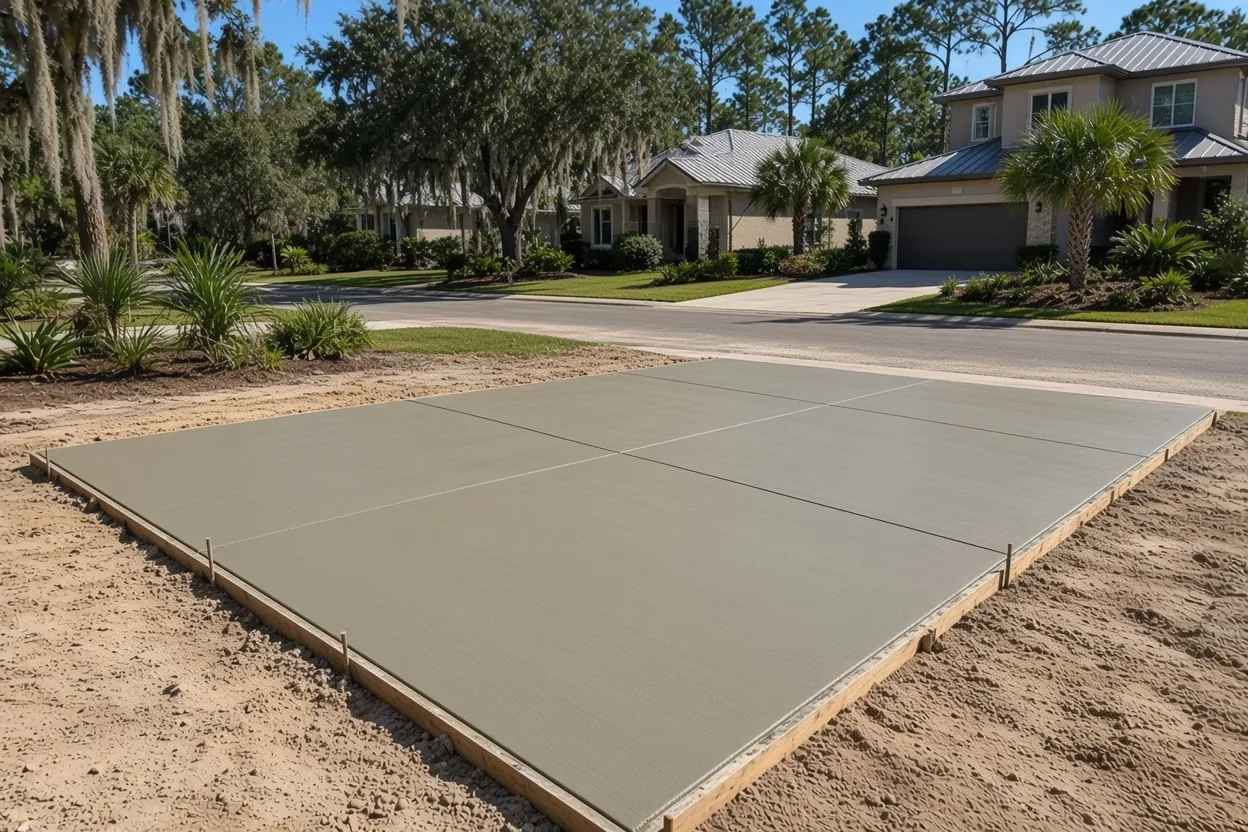
A Plant City driveway permit comes from the City only when your parcel's Tax District on the county Property Appraiser record reads PC: the Building Department for the driveway, Engineering for the apron in the right-of-way. A U means unincorporated land, and Hillsborough County handles it. Inside the city, the apron has its own spec and a form inspection booked 24 hours ahead.
PC or U: the two letters that pick your permit office
Start with the parcel, not the envelope. The City of Plant City's help center says you can have a Plant City address and still be in the county, and it gives a quick test: pull the property up on the Hillsborough County Property Appraiser site and read the Tax District. PC means the lot is inside city limits and your Plant City driveway permit comes from the City. U means unincorporated, and the county takes the application.
That one lookup decides everything else on this page: which office reviews the job, whose apron rules apply and whether the right-of-way paperwork is a city or a county form. Walden Lake sits inside the city. The mapped center points of older communities around town, such as Knights, Coronet and Bealsville, fell outside the city line on the 2020 Census map, but annexations move edges, so read your own record. Our driveway crew works under whichever office that record names.
When the City wants a permit, and the cosmetic work it skips
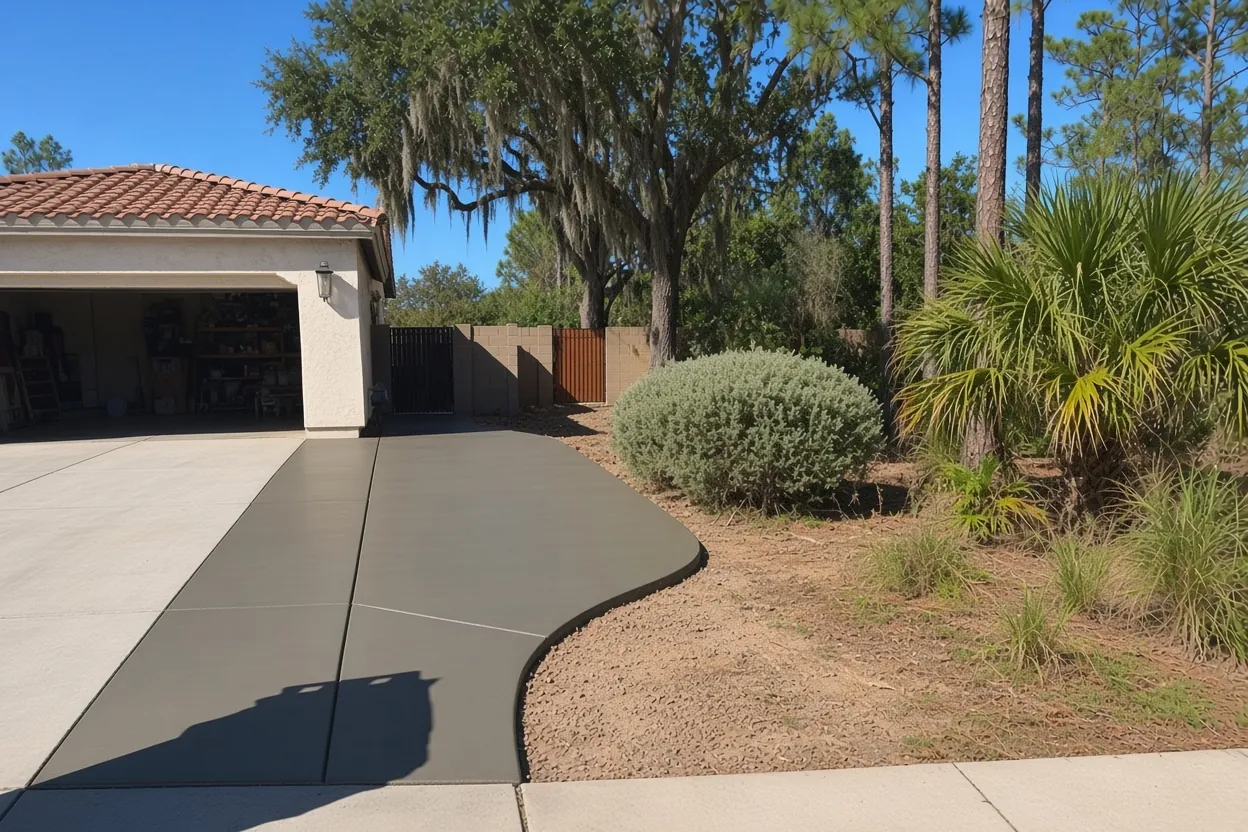
Inside city limits the answer is yes for driveway work. The city's help center says a permit is required to construct, enlarge, alter, repair, move or demolish a building or structure, and it spells out that this covers uninhabitable structures such as accessory buildings, driveways, walkways, fences and retaining walls, plus clearing and grading. The FAQ is blunt about timing: the permit must be issued before work starts.
So a new driveway, a tear-out and replace, a widening for a third car and a walkway that ties into the driveway all count. The same page names the work that is typically exempt, and it is cosmetic: cabinets, floor coverings, painting, shelving, tile and wallpaper. Concrete is not on that list. If a neighbor tells you a replacement is just maintenance, put the question to the Building Department before you rely on it, and read the city's permit FAQ in its own words.
Homes in the historic districts carry one more step, even for a small exterior change. That comes further down.
Concrete Pricing
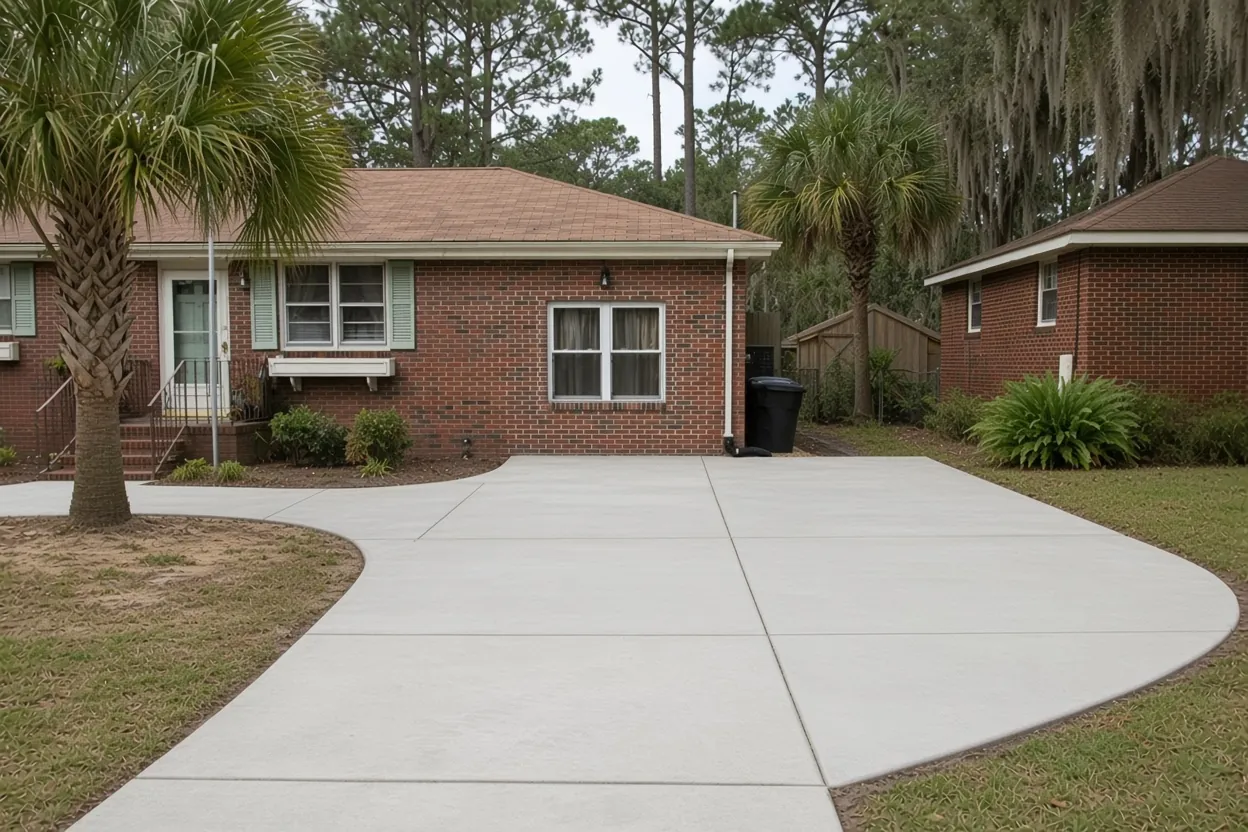
Our typical ranges for the flatwork a driveway permit covers. Permit and inspection fees are set by the City or the county and sit outside these numbers.
| Job | Per sq ft | Typical project | What moves the price |
|---|---|---|---|
| Concrete driveway | $8 to $14 | $5,000 to $10,000 | 4 to 5 in. broom finish, typical 2-car (about 500 to 700 sq ft); tear-out adds $2 to $4 per sq ft; the 6 in. apron and any culvert are listed separately |
| Sidewalk or walkway | $8 to $14 | $1,500 to $4,500 | 4 in. thick, 3 to 5 ft wide; short runs hit a job minimum |
| Stamped and decorative | $14 to $24 | $5,000 to $16,000 | Pattern, integral or release color, and sealer |
Ranges only. Your price comes as a free written estimate after we see the site, with the apron, tear-out and any culvert shown as their own lines.
The application packet: site plan, survey and Notice of Commencement
The Plant City Building Department takes applications through its online permit portal and keeps weekday hours of 8:00 AM to 4:30 PM. Three pieces of paper come up on driveway jobs.
- Site plan. Plant City wants structures, setbacks, driveways, walkways and sidewalks drawn on one. For a driveway that means the footprint, the width where it meets the street and its distance from the side lot line.
- Survey, on new projects and additions. When the driveway is part of a new house or an addition, a survey goes to Planning before the slab inspection. It shows the finished floor elevation of the lowest slab, the crown of the nearest road and every setback.
- Notice of Commencement. Florida requires one for improvements over $2,500 in materials and labor. It is recorded with the County Clerk, and over $5,000 a copy goes to the building department before the first inspection. Our typical 2-car driveway runs $5,000 to $10,000. A full replacement will cross that line. A short extension or an apron-only repair may not.
Ask the counter for its current checklist when you apply. Forms change, and the office holds the live version.
What to Expect, Start to Finish
Read the Tax District
We look at the parcel record with you: PC for the City, U for the county, plus any HOA or historic district.
Free on-site estimate
We measure the driveway, look at the apron, ditch and drainage, and put the quote in writing.
Approvals before forms
The permit and any board or historic certificate are settled before anything is dug at the street.
Forms and the inspection call
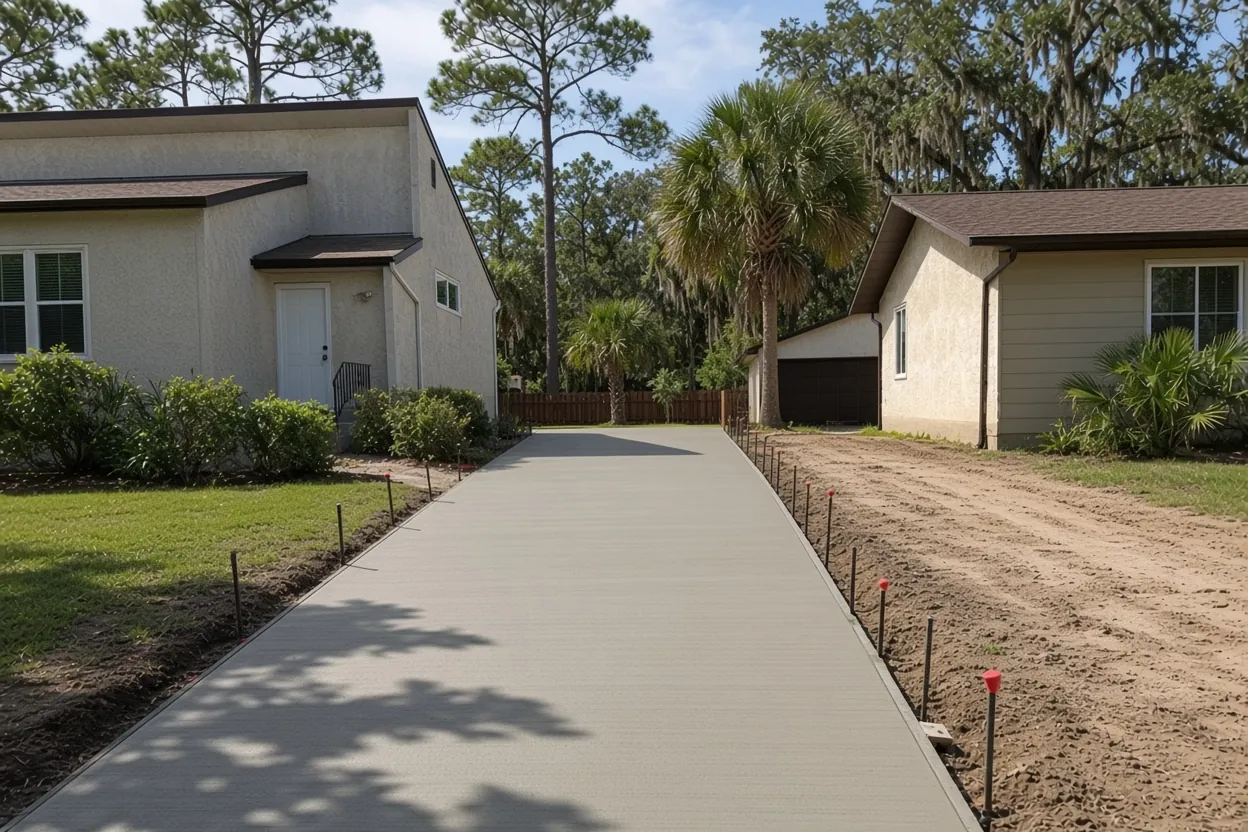
The apron is formed and jointed, and the City gets its 24 hours notice for the form inspection.
Pour and clean up
We pour once the forms pass, cure the slab and leave the site clean.
Apron spec, line by line, as Engineering writes it
The City's help center lists these driveway requirements under Engineering. The first three apply to the part of the driveway in the right-of-way, the public strip at the street. As a guide, the city notes that where there is a sidewalk, the sidewalk and everything between it and the street is right-of-way.
- 3000 psi concrete with fiber, at least 6 inches thick.
- No steel in that strip: no rebar and no wire mesh.
- On culvert lots, concrete pipe of at least 15 inches with mitered end sections. Engineering can ask for a larger pipe case by case.
- Every driveway slopes toward the road. A driveway that sends runoff toward the house is not approved, and inverted driveways are not allowed.
- Full-depth pressure-treated wood crack-control joints at the right-of-way line, along the road and along any sidewalk. No saw cuts.
- Where the apron meets the road, the contractor saw-cuts the asphalt to a straight line so the wood joint sits clean.
- Other materials, such as pavers, may be approved for the right-of-way. Engineering decides.
- No laterals, cleanouts, water service lines or meter boxes in or under the driveway.
The slope rule and the no-utilities rule cover the whole driveway. The thickness, strength, no-steel and wood-joint rules cover the apron in the right-of-way, which is why the apron shows as its own line on our quote: 6 inches against the 4 to 5 inches in our standard driveway price, wood joints instead of cuts, and no steel.
Booking the form inspection 24 hours ahead
- Right-of-way approval. The city sends right-of-way permit questions to Engineering, and nothing gets dug or formed at the street until the permit is issued.
- Culvert first, where there is one. On a ditch lot, the pipe (15 inches minimum) and its mitered ends go in before the apron forms.
- Forms and joints. The apron is formed to the 6 inch depth, with the wood joints placed at the right-of-way line, the road edge and any sidewalk.
- The call. Plant City requires an inspection of the concrete forms before a driveway apron is poured, and it asks for 24 hours notice to schedule it.
- Inspection, then concrete. The City looks at the forms while changes are still cheap. Once they pass, the pour goes ahead, weather allowing.
That notice can't be squeezed on pour morning. If an afternoon storm pushes the pour, the inspection date and the truck order move together, so build a spare day into the plan.
Historic districts: the Certificate of Appropriateness comes first
Plant City has three National Register historic districts: Northeast Residential, Downtown Commercial and Downtown Historic Residential. The city's Historic District Design Standards say owners may not make visual or material changes to a property's exterior without a Certificate of Appropriateness, and decks and driveways are on the list of changes that need one. The certificate must be in hand before any building permit is issued.
Minor changes to contributing buildings go to the Design Review Official, and larger ones go to the Historic Resources Board. You apply through Planning & Zoning's historic district page online or at City Hall, second floor.
On materials, the Standards ask owners to keep existing driveway paving wherever possible and list brick, concrete pavers and poured concrete as appropriate. Existing granite curbing stays. The Standards also bar changing a historic street's paving or widening it, which matters on the brick streets of Northeast Residential, just north of downtown. For walkways, they say to keep the ones that reflect the property's history and to make new ones compatible in size, scale, materials and color.
Walden Lake: a neighborhood board on top of the city permit
Walden Lake is inside city limits, so the City issues the driveway permit. The association layer is what changes the timeline. The community covers about 2,000 acres around a 62-acre lake, and its gates and guardhouses run through a Neighborhood Improvement District the city created in 1993. The Walden Lake Community Association lists 30 neighborhoods, among them Aston Woods, Forest Club, Forest Park, The Preserve, SilverBrooke, Sutton Woods and Walden Oaks.
Individual neighborhoods run their own HOA boards. Forest Park, Forest Club and Sutton Woods each hold separate monthly board meetings, so driveway width, color and paving rules can differ one neighborhood to the next. Ask your board for its covenants and its approval process before you apply for the city permit, and get the approval in writing. Then hand us the answer and we'll draw and quote to match it. Our page on Walden Lake driveways and patios covers how a job runs inside the gates.
County parcels: Development Services and the $50 right-of-way permit
If the Tax District reads U, Hillsborough County Development Services takes over. Its right-of-way permit page says construction in county right-of-way needs a permit, and one permit type covers residential site access and driveway connections. The base fee is $50 per permit, and homeowners or contractors can apply. The page also says the county does not issue these permits inside Plant City, Tampa or Temple Terrace.
The rest of the driveway falls under the county's building rules. Concrete driveways, sidewalks, slabs and patios are not on its exempt-work list, and for anything not listed the county says the work most likely requires a permit. So ask Development Services before the forms go in.
One thing not to assume: the City's 6 inch fiber apron rule is a city rule. On a county road, ask Development Services what it wants at the road edge and over any ditch, and have the answer on paper before the truck is ordered.
HB 803 and the $7,500 line: read the conditions before you skip the permit
Florida House Bill 803 took effect July 1, 2026. Hillsborough County's work-exempt page explains how it plays out on county parcels: non-structural work on a single-family home valued under $7,500 can be exempt from a permit. It is not automatic. The owner or contractor applies for the exemption through the county's HillsGovHub portal, with the contract or other paperwork showing the scope and value.
The conditions are strict. The exemption does not reach electrical, plumbing, structural, mechanical or gas work, or any property partly or fully in a flood hazard area, and you can't split one job into smaller ones to stay under the cap. If the county decides a job doesn't qualify, a permit is required. Its list of likely exemptions names siding, soffits, windows, doors and non-structural roofing. It does not name driveways.
Inside the city, ask the Building Department how it applies the exemption, since the building official makes that call. An apron in the right-of-way is a separate conversation with Engineering either way. Our 2-car range runs $5,000 to $10,000. Some driveways land under $7,500 and some don't, so ask before you count on it.
After the pour: the apron is yours to keep up
The City of Plant City does not repair driveway aprons. The help center puts maintaining and, if needed, replacing the apron on the homeowner, and it says city repairs stop at the edge of pavement. When a root or a utility cut cracks that strip later, the fix is yours, and a replacement apron follows the same permit and spec as a new one.
Two other city offices can matter on a driveway job. Streets & Stormwater handles adding fill, redirecting water and installing drainage structures, and the city says those changes often need a permit or approval. Planning & Zoning handles tree removal, which may need a permit too. Both are listed in the city help center. Raising a low driveway with fill or taking out an oak to widen it is a bigger decision than it looks, so settle it with those offices before the forms go in.
Fill matters for a second reason on sand: how it is placed and compacted decides how the slab settles. Our guide to pouring on sandy ground covers the base work.
Five questions to get answered on the quote before you sign
Put these to every contractor you talk to, and get the answers written on the quote:
- Who applies for the permit, and under which office: City or county?
- Who books the 24 hour form inspection, and who meets the inspector?
- Who records the Notice of Commencement if the job tops $2,500?
- What does the price assume for the apron: 6 inches, 3000 psi fiber concrete, no steel, wood joints, and a culvert if there is a ditch?
- What happens to the schedule and the price if an approval or the inspection slips?
For the money side, our driveway cost guide breaks down what moves the number. When you're ready, the free on-site estimate goes faster if you bring the parcel's Tax District, photos of the street edge, any HOA or historic approval you already have and a note on anything at the road, such as a ditch or a meter box. Set the visit on the contact page or call (813) 722-1744.
Frequently Asked Questions
Do I need a permit to replace a driveway inside Plant City limits?
My Plant City address shows Tax District U. Who issues the permit?
What does a Plant City driveway permit cost?
How much notice does the apron form inspection need?
Can the apron have rebar or wire mesh in it?
Does a historic district home need approval before the driveway permit?
Can HB 803 let me skip the permit on a driveway under $7,500?
Is a Notice of Commencement needed for a driveway replacement?
Who fixes a cracked apron at the street in Plant City?
Sources
- Plant City FAQ: permits, driveways, Notice of Commencement, streets and stormwater, City of Plant City
- Plant City Building Department, City of Plant City
- Plant City Historic District Design Standards, City of Plant City
- Apply for a Right of Way (ROW) Management Permit, Hillsborough County Development Services
- Work Exempt from Permits, Hillsborough County Development Services
- Walden Lake Community Association, Walden Lake Community Association
- Walden Lake Community Association Neighborhood Improvement District, City of Plant City
- TIGERweb 2020 Census: Plant City city, U.S. Census Bureau
- CS/CS/HB 803 (2026): Building Permits and Inspections, The Florida Senate
Request Your Free Estimate
Tell us a little about the job. We'll call to set a time to come measure.
Thank you, we have it.
We'll call shortly to set a time to measure. Prefer to talk now? Call (813) 722-1744.
Page updated