Concrete contractor · Hillsborough County
Concrete Contractor in Madison Park, Plant City
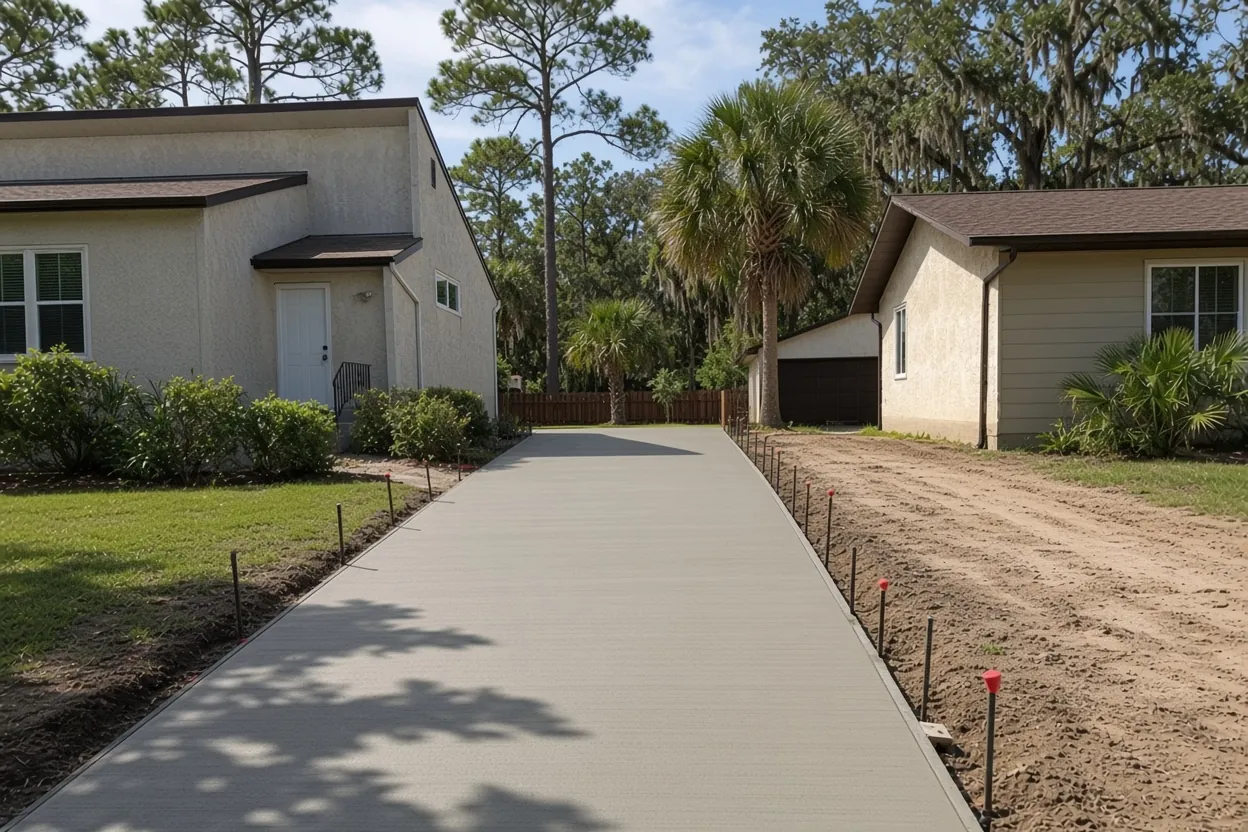
Driveways, patios, walks and slabs for Madison Park homes, priced in writing after a free look at your lot.
Straight Answers,
Written Quotes
Quick answer
Plant City Concrete Co is a concrete contractor for Madison Park in Plant City, pouring driveways, patios, walks and slabs on the old plats around Snowden Park and West Ball Street. About 86% of the platted area is mapped FEMA Zone AE, so we look at grade and runoff before we price your pour, then pull the city permit.
Madison Park at a glance
Madison Park is a century-old neighborhood inside Plant City, built on five plats, the first dated one recorded in 1907, with West Ball Street through the middle and Snowden Park inside its edges.
About 86% of the platted area is FEMA Zone AE, and the soils are mostly poorly drained Ona, Myakka and St. Johns fine sand with a shallow seasonal water table.
Permit office: City of Plant City Building Department · official site Fully inside city limits: city permit, site plan, apron form inspection with 24 hours' notice, and stormwater review for added fill.
West Ball Street, Snowden Park and a plat recorded in 1907
Every lot here sits inside Plant City limits, on ground platted more than a century ago. The first Madison Park plat, 131 lots in Plat Book 4, was recorded on February 9, 1907. A West plat (59 lots) followed in 1912, an East plat (31 lots) in 1913, and a South plat adds 36 more. West Ball Street runs through the plats. Inside are Waller Street, South Tyler, South Franklin and South Empire, plus West Madison, Washington, Strickland, Alsobrook and Bates streets.
Snowden Park sits inside the neighborhood, and the CSX line runs along one side by Simmons Career Center. South Alexander Street (State Road 39), Sammonds Road and Dr. Martin Luther King Jr. Boulevard all pass close by, so a ready-mix truck only spends a few blocks on side streets. Our service area page shows the rest of town we cover, and the driveway page walks through a full replacement.
Zone AE across most of the plats: grade before form boards
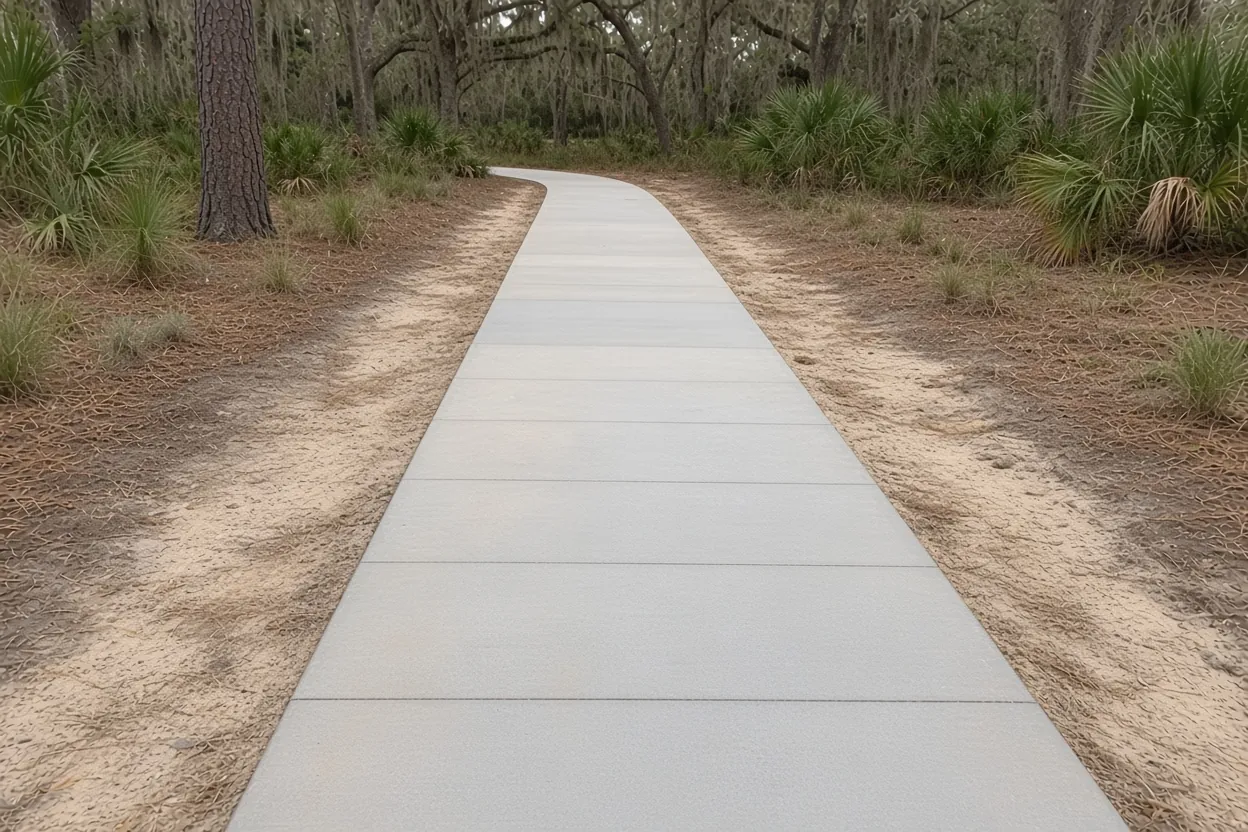
FEMA map panel 12057C0269H (effective August 28, 2008) puts about 86% of the platted area in Zone AE, with a base flood elevation of 122.0 feet. Like the Zone AE in parts of Walden Lake, that's a published elevation, unlike the unnumbered Zone A at Magnolia Green. The other 14% or so is Zone X. Those shares cover the whole area, streets and Snowden Park included, so they don't tell you where your own lot lands. Look your address up on the FEMA flood hazard layer, or we'll check it on the visit.
For flatwork, the zone comes into play when a job changes the ground. Plant City says adding fill, redirecting water or building drainage structures often needs approval from its Streets and Stormwater division. A patio built up on fill, or a wider driveway that sheds water toward the house next door, is the kind of job that can trigger that review.
So we keep new concrete close to existing grade, pitch it so water leaves the slab, and slope driveways toward the street, since the city doesn't allow one that drains back at the home. Any fill goes on the written quote as its own line, and we ask the Building Department about floodplain paperwork before a date is set.
Concrete Pricing
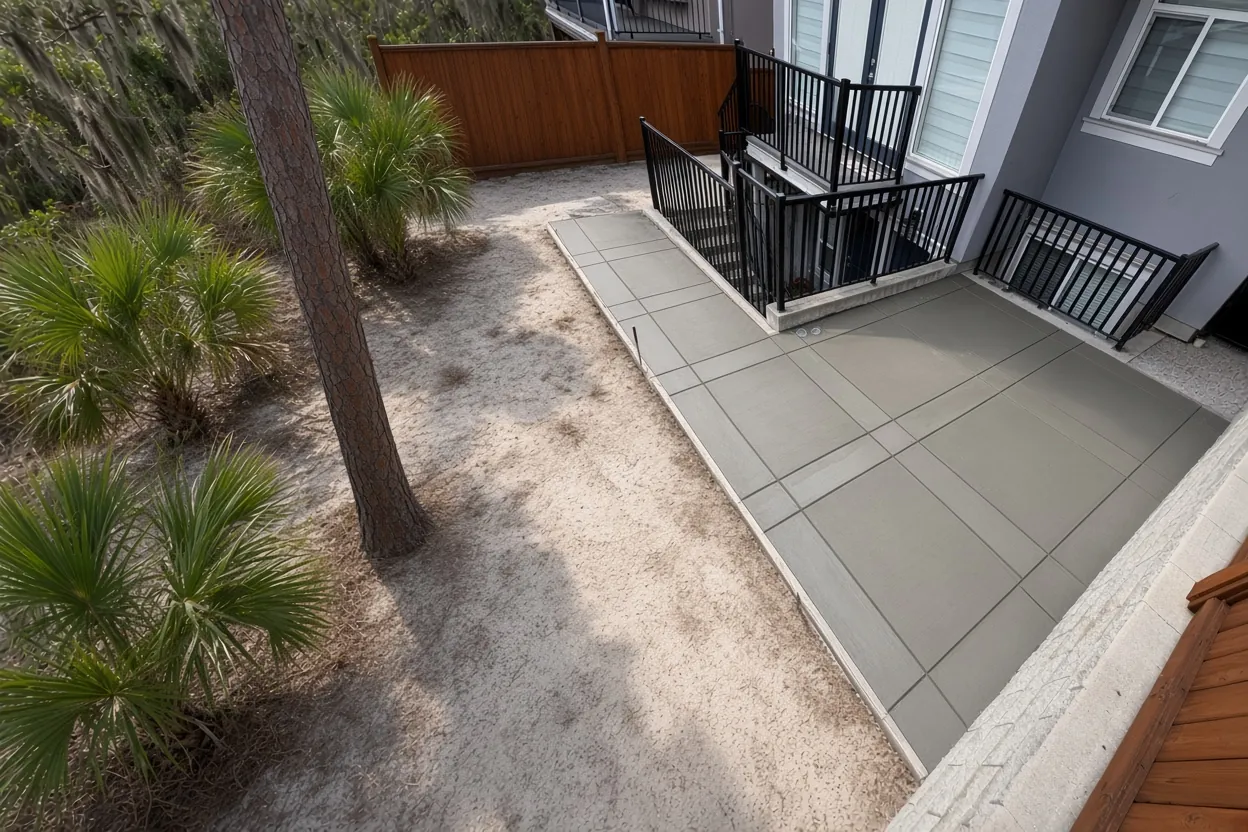
Here are our typical Madison Park ranges by job. Your number comes on a free written estimate after we see the site.
| Job | Per sq ft | Typical project | What moves the price |
|---|---|---|---|
| Concrete driveway | $8 to $14 | $5,000 to $10,000 | 2-car size, 4 to 5 in., city apron, old slab removal |
| Concrete patio | $8 to $14 | $2,500 to $6,500 | Size, finish, fill or grade changes |
| Sidewalk or walkway | $8 to $14 | $1,500 to $4,500 | Width, run length, job minimum on short walks |
| Stamped and decorative | $14 to $24 | $5,000 to $16,000 | Pattern, color, sealer |
| Slab or foundation | $7 to $12 | $2,000 to $7,500 | Thickness, base course; monolithic priced higher |
Ranges, not a quote. Tear-out adds $2 to $4 per sq ft, and fill or drainage work on a Zone AE lot is listed as its own line. Free written estimate after we see the site.
Ona, Myakka and St. Johns sand with water near the surface
The USDA soil survey maps about 74% of the neighborhood as Ona fine sand, about 15% as Myakka fine sand and about 10% as St. Johns fine sand, and about 98% of it is rated poorly drained. The seasonal water table can sit about a foot down in Ona and about 6 inches down in St. Johns. FDOT's SR 60 geotechnical memo says much the same for the wider area: terrace sand a few inches to more than 50 feet thick, with groundwater at or near the surface across much of Hillsborough County.
Wet sand still carries a slab if we build the pad right. We strip roots and organic topsoil, compact in lifts, and under a building slab hold clean sand fill to the 24 inches Florida Building Code R506 allows without approval. Under a heated room, a 6-mil poly sheet goes between sand and slab; driveways, walks and open patios don't need one.
The National Weather Service runs the local rainy season from May 25 to October 10, so summer pours go on the calendar for mornings and a soaked pad gets checked before forms go down. Our sandy soil guide covers compaction step by step.
What to Expect, Start to Finish
Look up the lot
We check your parcel on the FEMA map and note the soil and grade before the visit.
Free site visit
We measure, mark where water runs today, and talk through finish and layout with you.
Written quote and permit
You get a written quote within 48 hours, then we file with the city and book the apron form inspection.
Pour, cure and clean up
We pour on a dry morning, cure the slab, and leave the street and yard clean.
City permit, the 6-inch apron and the $7,500 exemption question
The whole neighborhood is inside city limits, so your permit comes from the City of Plant City Building Department, not Hillsborough County. Driveways and walkways need a permit issued before work starts, and they have to be drawn on the site plan.
The strip of driveway inside the street right-of-way has its own spec: 3000 psi concrete with fiber, at least 6 inches thick, no rebar or mesh, pressure-treated wood joints instead of saw cuts, and a form inspection booked with 24 hours' notice. After the pour, that apron is yours to maintain.
HB 803 lets some single-family work under $7,500 skip a permit, but only with written approval first, never for structural work, and never on a property with any part in a flood hazard area. About 86% of the plats are mapped Zone AE, so check your parcel before you count on it. On jobs over $2,500, Florida law has the owner, or the owner's agent, record a Notice of Commencement with the county clerk before work starts; once the contract tops $5,000, the permit holder also files a copy with the Building Department before the first inspection. Our Plant City permit guide lists each step.
Older houses, 40 empty lots and parcels near 6,500 square feet
The 2026 tax roll counts 256 parcels: 185 single-family homes, 40 vacant residential lots, 11 small multifamily buildings, 9 churches and 8 city parcels. Build years run from 1898 to 2025, with a median around 1974. Homes from the 1950s through the 1970s are the biggest group at 104, and 17 went up in 2020 or later. The median house lot is about 6,545 square feet.
On an older house, the job may be a cracked Madison Park driveway or front walkway that has to come out first; tear-out adds $2 to $4 per sq ft. On a small lot, a back patio has to fit around the AC unit, the fence and the path water takes to the street. On a vacant lot, a new house needs a foundation slab, and the city wants a survey before slab inspection showing finished floor elevation, the crown of the nearest road and setbacks. A stamped entry walk or pool deck can be priced on the same visit.
Next door, we also pour in Lincoln Park, Washington Park, Pinecrest, Seminole Lake and Walden Woods.
Frequently Asked Questions
Is all of Madison Park inside Plant City limits for a concrete permit?
Does the Zone AE flood map change how a patio gets built in Madison Park?
Can a Madison Park homeowner skip the permit on a driveway under $7,500?
How close is the water table under Madison Park, and does it affect the pour?
Who pays to replace a cracked apron on West Ball Street or the other Madison Park streets?
Can you pour a house slab on one of the vacant Madison Park lots?
Sources
- Plant City FAQ: permits, driveways, streets and stormwater, City of Plant City
- National Flood Hazard Layer: Flood Hazard Zones, FEMA
- Soils (NRCS SSURGO, Hillsborough County), USDA NRCS via Hillsborough County GIS
- Hillsborough County Subdivisions: Madison Park plats, Hillsborough County GIS
- Florida Statewide Cadastral (2026 tax roll), Florida Statewide Cadastral dataset (ArcGIS Online)
- Work Exempt from Permits, Hillsborough County Development Services
- Florida Thunderstorm Season / Rainy Season, NOAA National Weather Service Tampa Bay
- Florida Statutes 713.13: Notice of commencement, Florida Legislature (Online Sunshine)
- SR 60 PD&E Study Geotechnical Memorandum (April 2015), Florida Department of Transportation District Seven
- 2023 Florida Building Code, Residential, Section R506, UpCodes (ICC / Florida Building Code text)
Request Your Free Estimate
Tell us a little about the job in Madison Park. We'll call to set a time to come measure.
Thank you, we have it.
We'll call shortly to set a time to measure. Prefer to talk now? Call (813) 722-1744.
Concrete Services in Madison Park
Concrete Driveways
New driveways, extensions, and full tear-out replacements poured thick enough for Florida trucks and built to drain.
Learn MoreConcrete Patios
Backyard patios, lanai extensions, and screen-room slabs sized for real outdoor living in the Florida heat.
Learn MoreConcrete Sidewalks & Walkways
Front walks, side-yard paths, and city-spec sidewalks with proper joints so they don't crack and heave.
Learn MoreStamped & Decorative Concrete
Stamped and colored concrete for patios, driveways, and entries. The look of stone or pavers in one solid pour.
Learn MoreConcrete Slabs & Foundations
Slabs for sheds, workshops, garages, barns, and additions. Formed square, compacted right, ready to build on.
Learn MoreOur Service Areas
Concrete work across Plant City and its neighborhoods.
Page updated